
Defence silk for Peter Currie grills FCA caseworker Robert Cooper on the regulator’s knowledge of problems with the Collateral (UK) platform, and what’s said to be its failure to act.
This is a mammoth post covering just the morning of Tuesday April 25th, in short:
- Defence silk – ‘FCA GUIDE informed Director’s alleged fraud’: Aylott KC drills down on the fact that the FCA itself produced a ‘guide’ on how to change the name of the company on the interim register. It’s said the guide failed to stipulate anywhere what company directors should or should not do.
- FCA accused of not doing its job by Curries defence – Aylott argues that Peter Currie might have assumed that an FCA caseworker would be aware of him changing the name, as it was a public-facing register, and as he could see an internal log of changes he had made.
- Director of Supervision sought legal guidance: Beyond this, Aylott asks Cooper why his bosses did not act when they were aware of problems? John Davidson, director of supervision, was not sure at first whether what the company had done, in transferring Interim Permission from another company, was illegal and asked for this to be checked.
- Court hears evidence that FCA had full access to the platform and considered pulling the plug in 2017, an e-mail from FCA employee Charlotte Fried on December 8th 2017 records how they believed then that Collateral should be told to stop trading as it was not Peer2Peer and as it had tried to transfer Interim Permission from one firm to another (which can’t happen).
- Defence asks, why did nothing happen then? Aylott KC suggests that the regulator did not immediately act, because the issue was not as clear cut as it has been presented.
- Regulator feared a “run” on unauthorised platform if they revealed alleged fraud. Cooper replies to him quite unequivocally that they regarded the firm as an unauthorised business. But that they were worried about the implications of a ‘run’ on Collateral, as consumers had £millions invested in it. He acknowledged that there was internal debate.
- FCA caseworker resigned for lack of knowledge – Defence also goes into staff turnover being less than ideal, and into Mr Dodds, the first case officer, having resigned because he believed that he did not have enough knowledge and that somebody with more specific knowledge should be assigned.
Collateral (UK) Limited was a finance company which facilitated investments crowdfunded by members of the public. The firm and two related companies entered administration in April 2018.
The two defendants, Andrew Currie, 57, and Peter Currie, 59, both deny two charges under the Fraud Act 2006 and one charge under the Proceeds of Crime Act 2002 in this criminal prosecution brought by the Financial Conduct Authority.
For further information about the case, and to see our reporting of other days please visit our main trial information page.
Coverage of this trial has been generously funded from donations to our gofundme page. Please consider adding an amount to support crowd-funded journalism of the peer-to-peer lending sector.
Contemporaneous reporting by Alex Varley-Winter who tweets @avwinter. Edited by Daniel Cloake.
Robert Cooper, FCA investigator, takes the stand
“Good morning members of the jury, we had a bit of trouble uploading things to the iPads this morning but now we’re ready to go” is how Colin Aylott KC, the barrister representing Peter Currie began the day.
Mr Cooper was asked about the change of personnel and how that happens within the FCA, “I think you accept that there was a high turnover of staff?”
Cooper agreed, “Also the FCA has a number of people who come in on secondment, for example barristers spend maybe 6 months or a year with the FCA and then they move on.“
Cooper continued: “When I have to think back to the time in Authorisations, when I was working there, in the Peer2Peer team, we did have a number of barristers there, to assist regarding the permissions…”
Mr Aylott then took the court through the people at the FCA who were involved in case management.
The first was JH, an associate in the permissions department, who in March 2016 emailed Peter Currie about his application.
Cooper: “I wouldn’t say that John [worked on the] application .. this predates my joining the team, but as I understand we had a number of applications, the window had opened … at the end of 2015, the bulk of these came in some way around Feb/March“.
We were told a total of 80-90 applications had been received and the department would send out a standard email to the large number of applicants outlining what information they had to submit.
Aylott: “Can we take it that when the application was received [by the FCA], someone’s going to look through it?“
Cooper: “No, not until it’s allocated. … it would go sit in a queue ready to be allocated, this email was sent out to a bulk / block of applications … to make sure that they could hit the ground running“
It was explained that Collateral had a total of five different case officers in the period from 2016 to 2018. [We will hear that one of them resigned citing a lack of knowledge outside P2P].
Aylott asked Cooper about what information would be checked: “the application form, the details in relation to the authorised persons … there’s a lot of things to consider like business loans and the like?“. Cooper agreed.
“The other thing you’re going to look at is the register and then once you’ve got on top of those basics, you’ll drill down into the emails?“
Cooper explained that the FCA had a system called INTACT (INTelligent Application
of Case management Technology) “A one stop shop so you can see the history of the case from the point that it was submitted.“
Aylott explained that it was 2015/2016 when Collateral “had germinated in the mind of Mr Currie“. When “the application was being made for full permission through Regal Pawnbroker [at that point] he was still director of that business”.
It was said that “If Regal Pawnbroker had submitted an application before its landing slot date had closed …. 2016 … the application would have been received and the interim permission would continue.“
“That company had interim permission … it was previously a pawn broker and the OFT would have given a license … if that license was still in existence it would convert into Interim Permission … until the FCA determined its application.“
Aylott said that “if there was a sensitivity about the name Regal Pawnbroker” then there was “nothing to stop Mr Currie changing the name at Companies House, it’s a straightforward process, a payment I believe of a small fee.”
Cooper confirmed this “…as long as they notified us of said name change. … Firms change their name quite regularly, it does happen.”
Aylott: “The change of name from Regal to Collateral would have been a straightforward process?“
Cooper: “Yeah, but it didn’t happen.”
Aylott asked what could be done if the directors didn’t want to trade under the name Regal Pawnbroker.
Cooper: “Every trading name has to be registered with the FCA. A company can have fifty … trading names.“
Aylott: “We’ll look at it in due course but on the system there’s a register set up for the purpose of putting a trading name on there. We also know that there was another company [of Peter Currie’s], Cash4Assets … it had Interim permission.”
Cooper told the court that the FCA had “created the Interim Permissions Consumer Credit Register, that was separate to the FCA register which was [for] authorised FCA firms, interim applied to firms that [previously] had a license from the OFT.“
The jury were shown screenshots from the interim register. “The various bits of information that a member of the public can look at: names, permissions …”
Aylott: “If investigators go into this system, they’ll see that Regal Pawnbroker Limited was a previous registered name of that I.P.”
“This is a public facing document, isn’t it? The case workers dealing with this would have seen a former name, Regal Pawnbroker Limited, wouldn’t they? … that would have been information that was … available to any case officer that was doing their job, it wasn’t hidden, was it?“
Cooper: “It still doesn’t change the fact that Collateral (UK) was the one that applied“.
Aylott: “It would have been obvious to any case officer if the FCA had done their job … that the change was there in black and white for any case worker doing their job to see Regal Pawnbroker Limited. I bet what happened … was that when you did see it, you were very surprised by what you saw?”
Cooper: “For me, I’d never seen an example of it happen … certainly not in the peer to peer space had anyone changed their name in this nature.“
The court was told that Cooper had done research on companies house, and found that Collateral was incorporated after the consumer credit licenses transferred from the OFT to the FCA.
Aylott: “the date that the application for full permission was submitted by Collateral, it was something that a caseworker doing their job could have seen, it wasn’t hidden somewhere?“
The court was then told how the process of changing the registered name on the Interim permissions register worked. It was said the FCA had even produced a guide telling users how to do it. The evidence of this was logged on a system called CCI.
Cooper explained he hadn’t checked that system “I didn’t have cause to use CCI“.
Aylott, referring to the guide: “Really what this is, is a walk-through guide to how to do this on the website, … we can see that step by step process on Page 7 …. “change firm details”.
A couple of options there … one option is “change firm name” and then below that is the trading [name] option as well.“
Cooper: “I can’t attest that this reflects how anyone uses the…“
Aylott: “… it doesn’t change how it can be amended. … Looking at this document, what it doesn’t do is provide any guidance to the person when you’re making the changes as to what they can and cannot do. … What it isn’t is a guide to “this is what you can do, this is what you can’t do”
The guide is just “here’s what you click on to facilitate changes”. The website itself appears to have had some indication that certain details could be changed.“
Cooper: “if a firm had a number [of] trading names …“
Aylott: “Not just trading name but firm names as well can be changed, that’s why we’re here.“
Cooper: “It appears so, yes that did happen yeah.“
Aylott: “Do you know of any definitive user guide that would tell deal with those points I’ve just put to you?“
“No.“
Aylott: “Do you know of any other guides to what’s permissible and what’s not permissible?“
Cooper: “I don’t know off the top of my head.“
Aylott: “All the documents that we’ve been looking at … something the public would have been able to look at?“
Cooper: “No, you log into the CCI system as a firm, our version of that system allows you to see what you changed… Line by line, only the FCA would have access“. Cooper later confirmed there was only a “limited number of people who had access to this specific system“.
Aylott suggested that a case worker could see there had been a change of name and then gain access to see what happened and when. “If we look at this, December 2015, there’s a whole list of changes there.“
Audit Trail
12/12/2015 “The firm name has changed from Regal Pawnbroker Limited to Collateral (UK) Limited”
Cooper: “It doesn’t say that the company is changing hands. It wouldn’t go to Companies House” and there wouldn’t be “any automatic checking“.
Aylott: “What we can’t tell from this document … is how many people from the FCA accessed this page to look at this?“
Cooper said he didn’t think so “especially given the passage of time.“
Aylott: “All this records is not who accesses the page, but who changed it?“
Cooper agreed.
Aylott: “Look at the application form please … when you get to just page 2 of that document, what was the date of the incorporation or formation of the applicant?“
“17th Nov 2014“
Cooper: “Peer2Peer wasn’t regulated by the OFT. Peer2Peer wasn’t regulated, but was allowed to join the interim permissions regime to allow them to continue to trade.”
Aylott: “It would have been obvious to any individual looking at this that you couldn’t have had “interim permission” in the name of Collateral. If this was a genuine mistake by Mr Currie then it could have been rectified?”
“Yes“
His Honour Judge Griffith asked if any case officers had looked at the CCI system (e.g. the log of changes to the interim register) “during [their] review of the applicant”.
Cooper: “We wouldn’t log into that as a matter of course, that was a client facing system. INTACT is our system for case management, we wouldn’t use CCI.“
HHJ Griffith: “was there a system whereby the FCA was notified of a significant change on the CCI system?“
Cooper: “There was a decision at some point taken to alleviate that central pressure…we didn’t get notified …This is the Interim register, it is not the FCA register. These firms that are on the FCA interim register are not regulated.“
Aylott commented “It’s still an FCA responsibility isn’t it.”
…
Cooper said that “firms that had access to this system were lending £thousands and £thousands … there’s only been a handful of examples where a trading name was changed to allow this shift from one firm to another.“
The jury heard that the interim register was closed when the FCA authorised the last of the consumer credit firms.
Aylott: “The point I’m making is that the firm making the changes [of firm name, on the interim register] are not aware that that’s not something that a case worker would be told. … on a basic level, you would agree that that is something that any caseworker looking at at the application should pick up?“
Cooper: “I would agree, the basic check could have been done. I agree that they did identify that the permission was wrong, so they identified at least … the fact that collateral should have been trading as a peer to peer platform.“
Aylott: “I’m going to deal with that in a few moments. In relation to making [and viewing] changes at Companies House, we go on to the companies house website, you don’t have to be a user, you don’t have to pay, it’s a very easy [thing to check]“
Cooper: “It’s a godsend, in my view. A lot of companies, I mean any company [registered in this jurisdiction], is on there.“
Aylott: “It would have taken them about a minute to get Companies House information. … If there was a deception in plan here, one of the basic things that could have been done was to apply through a company that hadn’t been incorporated after April 2014. … you can buy these companies off the shelf. Someone could set up a company and appoint someone else as a director.…”
Judge Griffith interrupts: “He’s being asked about things he doesn’t really have experience to talk about. … I’m not suggesting it’s unfair … What you’re asking about was in December 2015, the solicitor doesn’t pick it up and say “oy, this is a firm that didn’t exist then.””
Cooper: “No, the solicitor didn’t miss anything. Peer2Peer is not regulated before 2014, we made an assumption that a peer to peer firm … what it would have done was gone to the OFT before April to say “I need a specific license” which from the first of April would get converted to a peer to peer interim permission. That applies until it … converts to a full authorisation“
“In the case of Regal Pawnbroker Limited … [if they] wanted to carry out a different activity — debt licensing, peer to peer, whatever — it was, at every point, it would have had submitted an application to do so.“
Judge Griffith: “Where are we? Are we saying they couldn’t do Peer2Peer?“
Cooper: “Not without permission.“
Aylott: “But that’s based on your recollection of what the application form showed … do you agree with me?“
Cooper: [no…] “‘Operating an electronic system in relation to lending’ is the name of the permission, the interim permission“.
Aylott asked “how does one marry up what’s on the application form and … described with what’s on the IP [interim permission]?“
Cooper: “Any firm that applies for authorisation would expect to have some grasp of what it is applying for, there are various activities laid out in PERG [the PERimiter Guidance manual) … you don’t just decide one day “I’m going to do this” you have some knowledge and you seek guidance.”
Aylott: “[at Collateral] they had a good firm of solicitors and a good firm of compliance advisors. What’s on the IP is different to what’s on the application form.“
Cooper: “the guidance is clear and you’d expect someone to know what they are applying for.“
Aylott: “The FCA was granted access to a dummy account, to the platform operated by Collateral.”
Cooper: “Yes, I went on it yeah.“
Aylott: “Why didn’t someone say, you’ve got to take it down?“
Cooper: “I don’t know why someone didn’t say it but I believe there was a — a lot of meetings”
Aylott: ““That platform, get it down” there was nothing of that?“
Cooper: “We have lots of things to weigh up with these types of decisions, the fact that it didn’t have interim permission, it was an unauthorised business … you’re still managing the risk of ‘we’ve got people invested in this platform” you’ve got people borrowing.
We can’t just go to a firm, and say take down your platform, because it would cause a run on it“
Aylott says that Cooper didn’t become involved with the platform until 2017 and that action didn’t occur until 2018.
“I don’t suggest for one minute that you were involved in the in the decision that got us here … do you know why nothing happened until late January?“
Cooper replied that “the issue when you’ve got a platform that’s got millions of pounds invested by consumers, you’ve got to make sure that you mitigate the problem. … liaise with lawyers, directors, inform the director of supervision…“
Asked about the period November 2017 to January 2018 Cooper said:
“We wanted to make sure that we have our ducks in a row before we are preparing to interview Mr Currie. At that time we didn’t know what would happen when we informed Mr Currie of our concerns. At the back of our mind is that people have got their money in this so you want to protect them as much as it’s possible to do so.“
Aylott commented that in late 2017 there was a definitive view at the FCA that this was wrong. He showed the jury an exhibit ‘P2P weekly note’ from 8th December 2017
The court was told that the note said “The firm is currently conducting unauthorised business as it doesn’t hold interim permission.“
Comments by Charlotte Fried, a Manager in the Office of Executive Director of Retail Lending and Authorisations, said:
“Although we think that the firm believes that it [has] interim permission , from another firm, which is not possible …
We will meet with the firm and request that it stops trading … John’s view is if it’s UBD [unauthorised business division] we should of course tell them to stop, but we need to be absolutely sure that what they have done in terms of transferring IP [interim permission] is not legal, and we need to have very very clear lines for comms, contact centre etc about our position for when this hits the press.“
Aylott: “it’s not a question of legality it’s a question of how we determine what’s being done, it’s not [as] clear cut perhaps, as what’s being suggested and they want to check it don’t they?“
Cooper replied “… they’ll just want to make sure of the legal points, we have a general counsel division that can answer. There’s the things that you know can’t happen. A firm can’t have interim permission if it’s incorporated after April 2014“
The platform was “unauthorised and has a loan book with people investing money into it.”. We would want to “refer it to our general counsel division.“
The Judge asked about Collateral getting permission after the April 2014 date.
Cooper: “We know — the people that deal with our applications know — that it can’t happen.“
Aylott mentioned the view of Jonathan Davidson, who was Director of Supervision, was that “we need to be absolutely sure that what they have done (in terms of transferring IP) is not legal“
“He can’t say definitively what they’ve done is wrong” stated Aylott.
Cooper replied saying that there had been an internal debate about this, “and that’s why these checks have been carried out.“
Aylott: This “shifting of the case from one person to another, it’s not best practice and can result in unsatisfactory outcomes, Mr Walsh, we know, he [said] this case has shifted through a number of hands, not best practice and not ideal.“
Aylott asked about a case worker at the FCA called Howard Dodds who worked on Collateral in October 2016.
The court was told that there had been a series of exchanges between Mr Dodds, Mr Tall (the solicitor for the firm) and Collateral. It was after this that Dodds had resigned.
We were told that Dodds had said: “I don’t think there’s any purpose in my continuing with this case as I have very little prior knowledge of the Consumer Credit Act permissions regime outside of P2P and I think it very much looks like someone with more specific knowledge should pick it up …”
HHJ Griffith interjected “I don’t think he can comment on the decision by Mr Dodds to step aside and why he did that.“
Aylott: “If it was something that was quite out of the ordinary in those circumstances he can comment about the decision of Mr Dodds. He’s not here as an expert but he has expertise on this process. But if your Honour says no, I’ll leave it.“
Robert Cooper’s evidence finished.
The trial continues.
Case details:
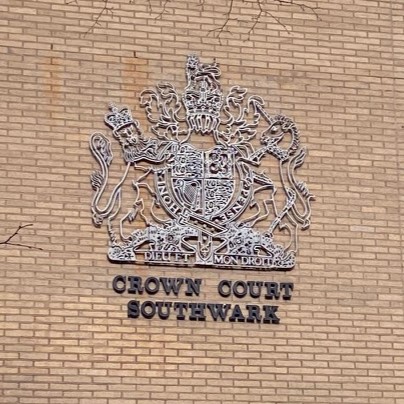
Court 12 Southwark Crown Court
Before His Honour Judge Griffith
25th April 2023 – Morning session
Case number: T20220056
CURRIE Andrew
CURRIE Peter
The Financial Conduct Authority are represented by barrister Stuart Biggs, assisted by Thomas Coke-Smyth.
Peter Currie is represented by barrister Colin Aylott KC, assisted by Ashley Hendron.
Andrew Currie is represented by barrister Henry Grunwald OBE KC, assisted by Oliver Renton.
The work on this site is protected by copyright laws and treaties around the world. All such rights are reserved.
You may print off one copy, and may download extracts, of any page(s) from our site for your personal use and you may draw the attention of others within your organisation to content posted on our site.
You must not modify the paper or digital copies of any materials you have printed off or downloaded in any way, and you must not use any illustrations, photographs, video or audio sequences or any graphics separately from any accompanying text.
Our status (and that of any identified contributors) as the authors of content on our site must always be acknowledged.
You must not use any part of the content on our site for commercial purposes without obtaining a licence to do so from us or our licensors.
 Mouse in the Court
One thought on “Register change “would have been obvious to any case officer if the FCA had done their job” jury told [Day 7AM]”