
Directors of a firm accused of lying to their investors about their accreditation claim they were made a “scapegoat” by the FCA as the register allowed them to easily change the company’s name, a court heard.
Collateral (UK) Limited was a finance company which facilitated investments crowdfunded by members of the public. The firm and two related companies entered administration in April 2018.
The two defendants, Andrew Currie, 57, and Peter Currie, 59, both deny two charges under the Fraud Act 2006 and one charge under the Proceeds of Crime Act 2002 in this criminal prosecution brought by the Financial Conduct Authority.
For further information about the case, and to see our reporting of other days please visit our main trial information page.
Coverage of this trial has been generously funded from donations to our gofundme page. Please consider adding an amount to support crowd-funded journalism of the peer-to-peer lending sector.
Contemporaneous reporting by Joe Morgan who tweets @nottherealjoe
The 59-year-old Currie admitted in interview that he had, or at least agreed with, changing the company’s name on the FCA’s register from one entity which had interim approval, Regal Pawnbroker Ltd, to Collateral (UK) Ltd, which did not, the court heard.
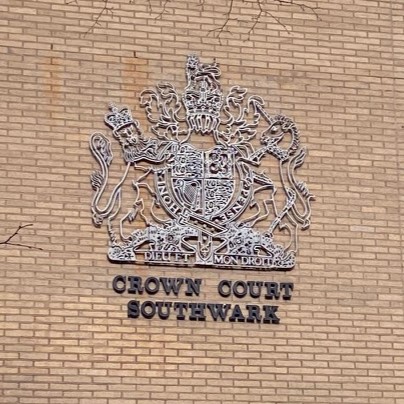
The FCA failed to pick up on the false register entry for 22 months, Southwark Crown Court was told at an earlier hearing.
Jurors today also heard the pawnbrokers business was initially only set up to provide the backdrop of a reality television show, which was called Pawn Stars UK and aired on the History channel in 2013 and 2014.
Peter Currie told FCA investigators that as the show was ‘staged’ and little money was being made out of it, as well as finding it difficult to land a bank account for pawnbroking, he pivoted to bridging loans.
When asked about people who said they would not have invested capital into the business if they had known it was not FCA-regulated, jurors were told the Currie brother said: “They were looking for somebody to blame“.
WITNESS BARRY RYAN
The hearing today began with FCA investigator Barry Ryan continuing to give evidence which was led by Henry Grunwald OBE KC, defending Andrew Currie, in cross-examination.
Mr Grunwald outlined communication sent from Collateral to the FCA in October 2017.
“Long ago before things seemed to have gone wrong, the FCA are being informed that there is a windup policy is in place and Refresh Recovery would be in place to deal with it,” he said.
Jurors were pointed to the Collateral’s business plan which outlined Refresh Recovery as a “business continuity specialist company that also specialises in corporate insolvency.“
Mr Grunwald also noted that disclosed to the court were all the emails provided to BDO, the administrators that were chosen by the FCA to deal with Collateral’s insolvency, but this was only the communication that could be recovered.
“The jury will hear in due course that in all the emails there are just under 8,000 that were sent by Andrew Currie or into which he was copied in or blind copied,” he said, to Mr Ryan.
‘”Are you able to confirm that amongst all of those there is not a single email sent by Andrew Currie to the FCA?“
“Yes, I believe that’s the case,” Mr Ryan said.
PREPARED STATEMENTS
Both Curries gave prepared statements to FCA investigators when they were interviewed at Blackpool Police Station in November 2018.
They read, in part: “I’m not aware of any breach of the Financial Services and Markets Act 2000. We’ve always understood that our financial activities are outside of the regulations.“
It added: “We have always considered and believed that the company had interim permission as did our legal and compliance officers and the FCA even though all the company’s activities were unregulated.
“I am not aware of any misrepresentations made which could lead to offences under the Fraud Act 2006.
“We had no complaints from investors, and we were winning awards from the industry. The only complaints that have subsequently been made are as a result of the administration by BDO who were appointed by the FCA.
“I am not aware of any fraudulent trading taking place that may be contrary to the Companies Act 2006.“
PAWN STARS UK
The FCA investigator first outlined in the interview that Peter Currie had experience in 17 businesses before Collateral from a greengrocer’s to Hewlett Packard.
“Regal Pawn was the chosen name by the television company,” Currie said, referencing Pawn Stars UK.
“The idea was that it was, with the pawnbroker, with Regal Pawn show it was a spin-off from the American TV show so it was the UK one so we were approached by the guys there, they didn’t have a credit license and said, ‘Would you like to be the lending arm?’, so, which was something that we said, ‘Yes, we’ll do that‘.
“But it didn’t really grab any business because the truth behind the show is most of it is staged.“
He said in 2014, banks would turn him down because having pawnbroking in the name was a “reputational risk” so he changed to bridging loans.
In interview, Currie also admitted to at the time not being aware of the difference of the name of an underlying company and a trading style.
“At that time, probably not, is the answer“, he told investigators.
As an example, PricewaterhouseCoopers International Limited is the underlying company name of PWC, by which it’s better known.
‘SCAPEGOAT’
The FCA investigators asked Currie about December 2015 when on the Interim Permission register the name was changed from Regal Pawnbroker Ltd to Collateral (UK) Ltd.
He said “a number of people” had his log-in but eventually agreed that he would have at least been aware of the change taking place, the court heard.
“Any changes that are allowable [on the FCA website] are not greyed-out. So, from a layman’s perspective, those changes should not have been allowed to be made without proof from Companies House or something like that to say that the company’s name has been changed.
“I think the FCA are looking for a scapegoat. I think they’ve got to accept some responsiblity here that their system is, it isn’t as robust it should have been.“
“What you’re saying,” the FCA investigator said, “is that because the field wasn’t greyed out the system allowed you to do it?“
“Correct,” Peter Currie responded.
“I think we’ve agreed in great detail what happened and the fact that you didn’t take legal advice or any other advice whether you could do that or not,” the investigator said.
“Yes. There’s no pop-up that came up that said, ‘Have you taken legal advice first?’“
Currie also spoke in interview about how the closing down of the business “devastated” him.
“It absolutely devasted me. Not just me, my family. My son worked in the business with me. Andrew still worked in the business. Matthew went and lived in Australia for two years because he just, this was his future, and he couldn’t see a future here, he wasn’t happy the way that I’d been treated. We all thought it was unfair, thought it was one-sided.“
He added: “It’s devastated me. I’ve had no income since. I had my future planned out and it was just taken away from us. And I think it could have been handled better, it could have been handled differently.“
‘COVERING HIS OWN BACKSIDE’
Peter Currie was also asked about advice he received from Richard Tall, his legal advisor, who told him:
“You are going to find it very difficult to…[say] this was an honest mistake. Essentially to do that you would have to be 18 years old and not have been in business before.“
“The FCA’s line will be that you’re in breach of one of the main principles of business which is an open and honest approach to the regulator.“
“It appears to me Richard’s covering his own backside,” Currie responded to the quote in interview.
“I’m not, to be honest, I have that much correspondence…I probably didn’t read it all and reading through this again his tone completely changed.“
In responding to the alleged breach, he claimed he was “always open and honest” with the FCA and took advice from professional advisors.
‘BROKER FEES’ TO ANDREW
In the interview in the police station, Peter Currie was also asked about large amounts of money exiting Collateral’s account days before administration.
“We’d agreed that he would get 2% of any loans that would go through apart from… I tried to keep hold of the payments although I always acknowledged that I owed, the companies owed Andrew, but it was when we decided that,you know, the companies weren’t, it wasn’t going anywhere, that we were getting all these, Andy said, ‘I need paying what you owe me. The company, you know, the company owes me…’ I think it was more than this, to be honest with you, because most of the business was driven through Andrew. “
When asked why Andrew received so much money and he didn’t, Peter said: “The agreement that we had was that I would build the business and if I was going to sell the business because, I mean, you could see in the press about finance businesses getting sold for big money, that’s mine. That was mine, mine was the long-term goal.“
“LOOKING FOR SOMEBODY TO BLAME”
Investors spoken to by FCA investigators said that they would not have entered into these arrangements if they thought Collateral hadn’t been authorised, the court heard on April 19th.
“I think they’re actually looking for somewhere, somebody to blame,” Peter Currie said.
“I’d bet you, if you got the truth from the investors 90% of them don’t look on the FCA website to see if they’re FCA-regulated. They make their own decisions.
“The reason we were giving 12% was probably because it was more risky but the reason we could give 12% is because we were charging 18% or more a year. So, that was the reason we could give it.
“But, you know, I mean, if you ask them the truth, the truth would be that they probably didn’t…
“After the registration bit came out somebody actually put it on a forum to say, ‘Yes, Collateral was actually registered after the date of the interim permissions application process’. They put it on a forum, they actually put it on a forum years ago and nobody picked up on it.
“Somebody asked the question on the forum and it was brushed under the carpet by other investors because they were happy getting the returns.”
Both Curries deny two charges under the Fraud Act 2006 and one charge under the Proceeds of Crime Act 2002
The first count of fraud alleges they dishonestly made a false representation to investors and potential investors that the company Collateral UK Limited was authorised and regulated by the Financial Conduct Authority.
The second count of fraud claims the Curries abused their positions, in which they were expected to safeguard, and not act against, the financial interests of the company by transferring £275,000 from Collateral to Auri Developments Ltd.
The third charge relates to converting criminal property, suggesting the Curries converted credits to the total value of £372,299.52 to bank accounts owned by Andrew Currie, knowing or suspecting it to be proceeds of crime, namely fraud by misrepresentation.
The trial continues on Wednesday 3rd May.
Case details:
Court 12 Southwark Crown Court
Before His Honour Judge Griffith
28th April 2023
Case number: T20220056
CURRIE Andrew
CURRIE Peter
The Financial Conduct Authority are represented by barrister Stuart Biggs, assisted by Thomas Coke-Smyth.
Peter Currie is represented by barrister Colin Aylott KC, assisted by Ashley Hendron.
Andrew Currie is represented by barrister Henry Grunwald OBE KC, assisted by Oliver Renton.
The work on this site is protected by copyright laws and treaties around the world. All such rights are reserved.
You may print off one copy, and may download extracts, of any page(s) from our site for your personal use and you may draw the attention of others within your organisation to content posted on our site.
You must not modify the paper or digital copies of any materials you have printed off or downloaded in any way, and you must not use any illustrations, photographs, video or audio sequences or any graphics separately from any accompanying text.
Our status (and that of any identified contributors) as the authors of content on our site must always be acknowledged.
You must not use any part of the content on our site for commercial purposes without obtaining a licence to do so from us or our licensors.
 Mouse in the Court
One thought on “Collateral director: “the FCA are looking for a scapegoat”, jury hears [Day 10]”